Monday, November 19, 2012

Haiku: Burnt

Smoke of jasmine rice
like incense wafts through the house.
Fragrance will not feed.

Saturday, November 17, 2012

John Donne: Witchcraft by a Picture

I fix mine eye on thine, and there
    Pity my picture burning in thine eye,
My picture drowned in a transparent tear,
    When I look lower I espy;
        Hadst thou the wicked skill
By pictures made and marred, to kill,
How many ways mightst thou perform thy will?

But now I have drunk thy sweet salt tears,
    And though thou pour more I'll depart;
My picture vanished, vanish fears,
    That I can be endamaged by that art;
        Though thou retain of me
One picture more, yet that will be,
Being in thine own heart, from all malice free.

------

I love how Donne seems always to be in perfect control of the force of his words.

The first stanza is like a hammer.  The unrelenting rhythms drive home the meaning, reinforced by intense internal word play.  It's compellingly creepy, and reminds me a bit of Poe.

But then those last lines completely fall flat. The rhythm is off, the rhymes are trite, the grammar is strained, ambiguous, and redundant.

I don't believe him, and I don't think he does either.

But of course that's the whole point.

Maybe its true, maybe it isn't... who cares?  He's gone.

Friday, November 16, 2012

Goldiblox and the 30th Spenserian Sonnet

I was reading some of Spenser's Amoretti this morning. But first a lovely little something I just saw on facebook.

I know. I'm distractible. But it relates... really.


Last night, as I folded the mountain of laundry, I listened to a lecture from my alma mater on the difficulty of communicating absolute truth in a media-saturated age.

 Images, you see, are more about feelings than about truth. You can't argue with an image.

Actually, you can argue with an image... it just takes work. A lot of work.

(Our family makes a hobby of analyzing billboard imagery as we drive around. I highly recommend the practice, both for entertainment value, and the opportunities to discuss important stuff. But I digress from my digression.)

Surrounded by powerful images, we've become a culture driven by emotions divorced from reason, and that has led to all sorts of appalling troubles.

But here's the weird thing: I could have very easily flipped over to another section of the archives, and listened to a lecture on scientism, and the way in which our culture has become obsessed with reason divorced from any overarching story.  That's true, too, and it's contributed to the exact same problems.

Our trouble isn't too much emotion or too much reason. Our trouble is that reason and emotion are no longer on speaking terms.

That's why I care so much about poetry. Thinking hard about feelings, feeling deeply about ideas: this matters. It matters a lot.

So I press on with my sonnets, hoping to contribute my own tiny scrap of thread toward the patching of this gaping tear. Goldie Blox is a stitch of a completely different sort, and I'm so very happy to see it.

And now for the Spenser sonnet that I was intending to share in the first place. The moment Spenser describes is perhaps nearly universal, but as he points out, it is really rather strange and unnatural. It's also (hopefully) brief. Opposites really do attract... but it's so that they can moderate one another. Otherwise, it's very, very miserable--and fodder for good poetry, of course.

That's the other reason why poetry matters. There's no experience so miserable that it can't be turned to good use in a poem. =)

(I hope you don't mind, but I've taken the liberty of updating the spelling a little bit. I do realize that Spenser wanted to be archaic... but I think that by this point he's probably old enough to be archaic without even trying.)


Sonnet XXX
by Edmund Spenser

My love is like to ice, and I to fire;
    how comes it then that this her cold so great
    is not dissolv'd through my so hot desire,
    but harder grows the more I her entreat?
Or how comes it that my exceeding heat
    is not delayed by her heart frozen cold:
    but that I burn much more in boiling sweat,
    and feel my flames augmented manifold?
What more miraculous thing may be told
   that fire which all thing melts, should harden ice:
   and ice which is congealed with senseless cold,
   should kindle fire by wonderful device?
Such is the power of love in gentle mind,
   that it can alter all the course of kind.

Thursday, November 15, 2012

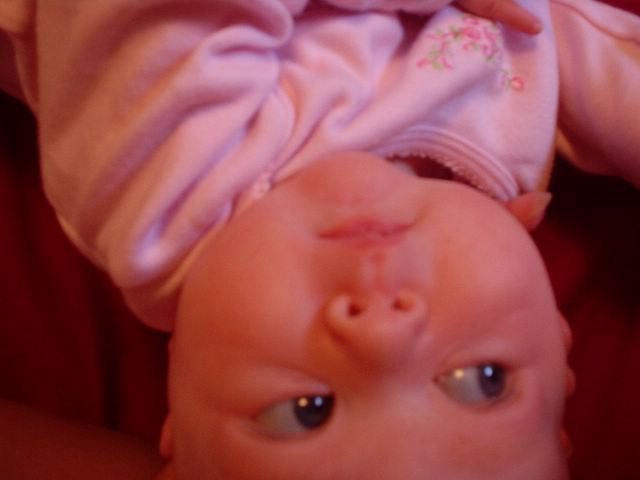
Sonnet for Baby Elizabeth

For a time, the swing will replace the overlapping
rhythms of her mother's breath and blood.
In time, her own rhythmic breath, her own heart's tapping
will be enough, unfolding as the bud
of rosy lips expands, contracts to hold
the words to frame the undulating dawn,
the wavelike rhythmic seasons, and the cold
salt-drenched tides of the moon. When her mother is gone,
these maternal rhythms will comfort her still,
soothing her asleep, awake, in turn
cradling her tenderly until
blinking and reborn at last, she'll learn
that the world itself's a small, reflective thing,
with the fleeting, surrogate sweetness of an infant's swing.

Wednesday, November 14, 2012

On Scarecrows

'There Are No Scarecrows Down This Lane' photo (c) 2012, Tim Green - license: http://creativecommons.org/licenses/by/2.0/One of the most famously deceptive rhetorical moves is known as the straw man argument. You know the drill: misquote your opponent as saying something really silly, and then debunk the silly idea that nobody ever believed in the first place.

If allowed to stand, straw man arguments can quickly turn any discussion sour and unproductive, so it's a good thing that people tend to be on guard against them.

But this can lead to a bizarre dilemma.

Sometimes people really do say silly things.

Sometimes people try to say perfectly sensible things, but end up saying silly things anyway. (I do this one all the time!)

And sometimes people say things that sound perfectly sensible and even obvious in one context, but start to sound pretty silly when you put them in a different context.

All of these situations deserve (demand!) serious dialogue. Silliness needs to be refuted, misunderstandings need to be cleared up, and ideas need to be examined in all their relevant contexts.

But in each of these cases, anything you say can be instantly dismissed as a straw man argument. And that's a problem.

Mary Kassian's review of A Year of Biblical Womanhood is a good case in point. Kassian laughs at the selection of books from which Evans quotes, but whether or not she happens to agree with them, each of those books has been very influential. Not all of the books cited were silly or extreme, either. It's been a long time, but I seem to remember getting a lot of good encouragement and insight out of The Hidden Art of Homemaking. Agree with her or disagree with her, Edith Schaeffer is not made of straw. She is a real woman, and her work has had an important influence on today's complementarian thinkers.

I think that Evans' selection of source material is quite defensible, but be that as it may, the book did not depend upon those particular choices. She could have written her (sweet, winsome, and uproarously funny) chapter on domesticity just fine without quoting from anyone but Mary Kassian.

Of course not all complementarians believe the ideas that Evans plays with.  It's quite possible to affirm every word of the True Woman Manifesto without believing that "God gave women a unique responsibility to create and maintain a welcoming, nurturing home environment."

But Mary Kassian does believe that. She doesn't hold to the more extreme views, but that much she does affirm.

And Rachel Held Evans disagrees with her.

So let's pull out our Bibles and examine the issues carefully, diligently seeking after truth. And leave the straw (wo)men out in the cornfields where they belong.

Tuesday, November 13, 2012

On taking Genesis seriously

I'm not sure why (the Platypus might know), but for some reason that's probably traceable back to some German philosopher a few hundred years ago, we have a habit of using the words "seriously" and "literally" as thought they were interchangeable. It's a bad habit, because we desperately need both words for their own separate and important purposes. It's annoying enough in sloppy casual conversation, but my head doesn't literally explode until we start talking about Biblical interpretation. That's where this problem can cause some serious confusion.

Sometimes we can get so worked up over whether or not to take the Bible literally, we forget to ask ourselves whether or not we're taking it seriously.

I like young-earth creationism. I think that would be pretty cool, and I'm firmly convinced that when God makes stuff, He does so with maximal awesomeness. As for the scientific evidence, I really haven't studied it enough to say one way or another. I admire those who inquire, but I have duties and vocations enough of my own, so for now I'm just going to have to withhold judgment. After all, "smart people say so" may be a sound basis for practical decision-making, but it certainly isn't a very scientific attitude.

But the whole debate feels a little bit like speculating about whether or not John is still sitting on the Island of Patmos, growing a very long beard while he awaits the second coming. Maybe he is. Maybe he isn't. The only thing we really know for sure is that the very question misses the point. 

Maybe creation unfolded in seven 24-hour days. That would be cool. But I'm utterly convinced that the Bible isn't trying to tell us one way or another.

Why? Because I believe that Genesis is the inspired Word of God. If these are the words that the Holy Spirit wanted to use to communicate with us, then it follows that these words must be exactly the right words to convey their intended meaning.

But if God wanted us to know the details of natural history, these are confusing words. If He wanted us to know the time-table on which he made the heavens and the earth, I'm not sure why He gives us the story twice, but with different sequences. Of course it's quite possible that some complicated scenario might account for both chronologies... but I just can't shake the sense that if that was the point, I probably could have come up with a better way of communicating it.

Whatever else it may or may not do, though, the Genesis creation account provides us with unimaginably rich and powerful insight into the nature of God and His creatures. It tells us what it means to be human, and it does so with better words than anyone else has ever come up with for the purpose.

And even just on a practical level, the (very clear and powerful) poetry matters a whole lot more than the (fuzzy and confusing) literal chronology. I don't really need to know when exactly it was that God created the sea monsters, or how long it took. But the fact that God made them changes everything. Every agent of chaos in my life is God's creature, and is under His sovereign control, possessing only as much power as He chooses to grant them. That's something that changes the way I live.

I don't need to know how many hours there were in the days of that first creation, but I desperately need to remember that there is evening and there is morning, and that God created them both. He separated them and named them and said that it was good. The dark night of the soul is not hidden from God. It is part of His distinctive workmanship, and even the blindness of my perplexity is for his glory, as the one who created me makes me anew.

God creates with the Word, effortless and instantaneous. The progressive stages of God's work are not the result of difficulty, but are rather an integral part of His revelation. Time itself and the fullness thereof was created to be an image of God's eternal rest. Man is the pinnacle of creation, but he is not the point. The whole poem revolves around the seventh day, around God's holiness and rest.

Over and over, God creates and separates, gathers and fulfills, and this beautiful and profound poem contains the template both for the grand sweep of salvation history, and for the unfolding of God's work in individual hearts. So law came through Moses, grace and truth through Jesus Christ. We see through a glass darkly, but then we shall see face to face, in that day beyond time when we enter into rest.

Monday, November 12, 2012

Veterans Day Links

'lest ...' photo (c) 2010, jenny downing - license: http://creativecommons.org/licenses/by/2.0/WWI poetry on NPR.  Good stuff.

I like Malcom Guite.  A lot.  This sonnet is haunting.

Sarah Bessey's words work their way into your soul, wounding and healing and singing.  This essay is no exception.

More good stuff from the Poetry Foundation